










Monday 23rd March 2026
A reckoning for social care
Earlier this month, Baroness Casey called for a reckoning for social care. In response, Stephen Hammersley, Chief Executive of Pilgrims’ Friend Society, shared his thoughts with local BBC Radio
In a speech given at the Nuffield Trust Summit, Baroness Casey called for a national reckoning for social care equivalent to the 1948 reforms that ushered in the National Health Service. She stressed that, unlike the NHS, the social care system has never had its own ‘creation moment’, and that as a nation we rely on an underfunded, cobbled together system where there is a lack of ownership and accountability, where workers are typically low-paid, and where there is a deep divide between health and social care which families are often left to navigate alone.
Baroness Casey stated that she has written to the Secretary of State for Health and Social Care asking the government to take six immediate actions on dementia, motor neurone disease and adult safeguarding due to an urgent need for reform in these areas.
Her remarks come part way through the cross-party Commission she is chairing on social care reform. The Commission was launched in April 2025 and will be undertaken in two phases, with the first report due in 2026 and the final phase reporting back by 2028.
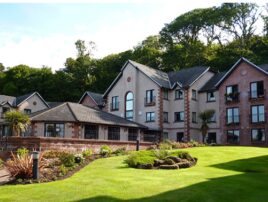
In the wake of the speech, Stephen Hammersley, Chief Executive of Pilgrims’ Friend Society, was invited for interview by several local BBC radio stations in areas where our charity has care homes. One of these was BBC Radio Essex, local to our care home Luff House in Walton-on-the-Naze.
Asked by presenter Ben Fryer if he thought social care was fit for purpose, Stephen responded to say that he didn’t think it was.
Stephen said, “In a sense, it's a good news story, because we're living longer, but as the numbers of people living longer have grown, the adult social care system hasn't kept pace with that... I think the problem with adult social care is it's always been seen as the poor relation to the health service.”
While the government has focused on cutting things like hospital waiting times, the need to provide people with care that is non-medical, such as help with washing and eating, hasn’t been given the same attention.
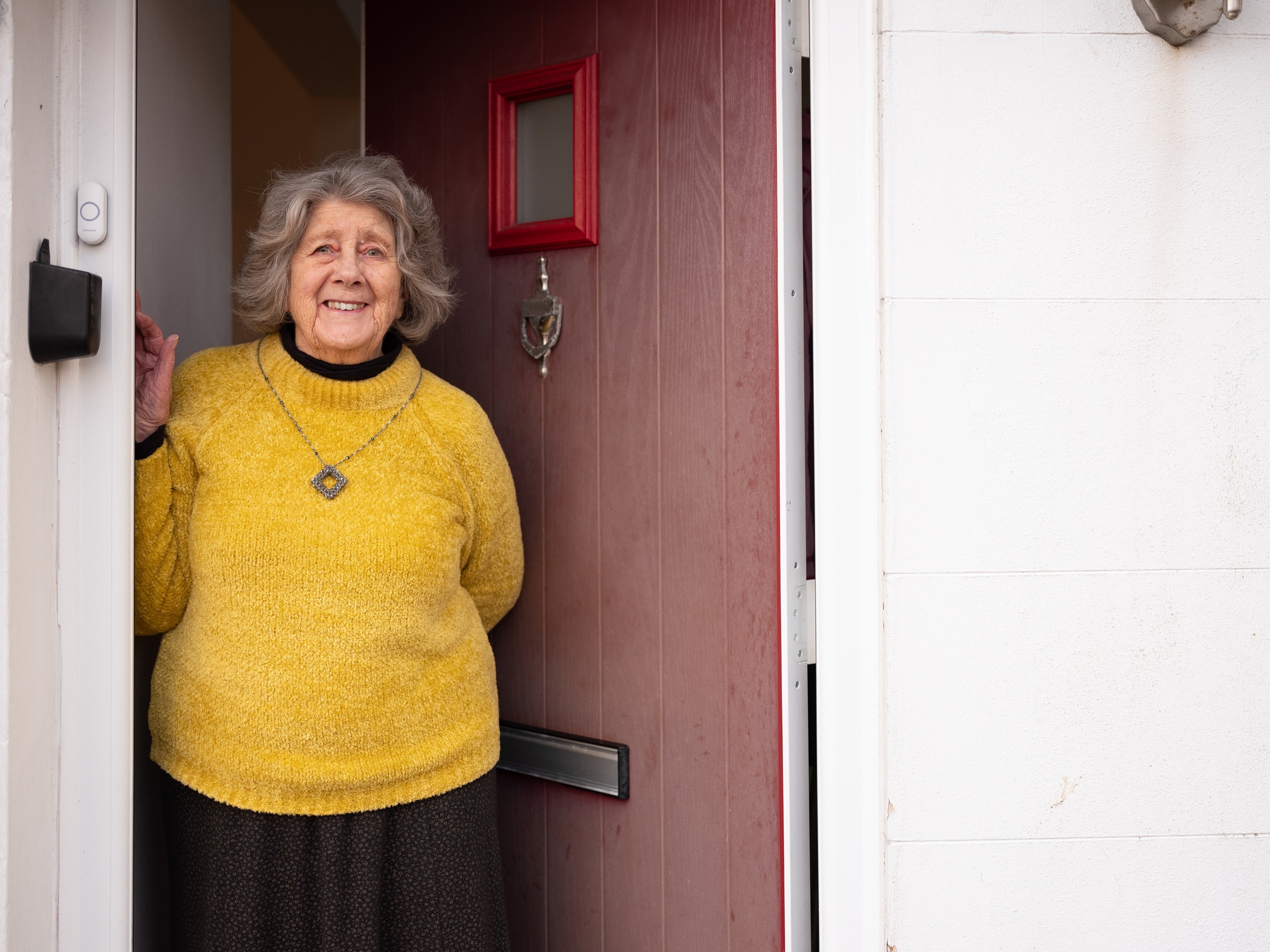
Stephen stressed that the people who are living in homes like ours are well looked-after, but that it is those families where someone is being cared for at home, with an unpaid carer such as a spouse or other family member taking on the responsibility, who may be really struggling.
As well as calling for reform to the funding system, Stephen suggested simple ways that we as communities could be looking out for our neighbours to help ensure people don’t get lonely and isolated. “My wife and I used to live next door to a couple in their 90s," said Stephen. "It made such a difference when we stopped round to take them a cake, or for a chat.”
Stephen's interview with BBC Radio Essex is available to listen on BBC Sounds until early April. It was broadcast during the Ben Fryer show on 6th March and the segment begins approximately 18 minutes from the start.
More on social care reform...

Better social care means better stewardship, says Sir Andrew Dilnot
The economist argues that a properly funded social care system would enable us to live out our God-given mandate to be good stewards

Interview with Vic Rayner, the National Care Forum
When Vic visited our home Middlefields House in Chippenham, we took the opportunity to ask her about all things social care

A shining light in social care
As the social care sector faces a funding crisis, Stephen Hammersley, Chief Executive of Pilgrims’ Friend Society, explores the role our organisation can play as an example of best practice