

















Tuesday 10th March 2026
A prescription with a difference
There’s a growing recognition that many health conditions are non-medical and can be treated instead through ‘social prescribing’, to the benefit of many older people. Esther Platt, Senior Consultant at the Good Faith Partnership, explains what it’s all about and how the local church can help

What helps you feel ‘well’? For many of us being well means good sleep, exercise, fresh air, nourishing food and staying hydrated. When we dig a bit deeper, we might also acknowledge that a warm and safe home, a few trusted neighbours and friends, and financial security are also significant factors in enabling us to feel peaceful, positive and confident in day-to-day life. Spiritual wellbeing also has a significant role to play.
For many people, changes in where we live and how we interact in our local neighbourhood have led to significant increases in loneliness and isolation. As highlighted by the Campaign to End Loneliness, this has a devasting impact on wellbeing and can lead to poor mental health, and increased risk of high blood pressure, heart disease, stroke and type 2 diabetes.
There’s now increasing recognition across the public sector and government that there are many needs for which clinical treatment is not always the most appropriate response. Indeed, the Lord Darzi review of 2024 and the government’s 10 Year Health Plan emphasise the need for health provision in the UK to be broader than simply treatment for the sick. The 10 Year Plan outlines three shifts for health: hospital to community; analogue to digital; treatment to prevention. There is also a strong emphasis on the importance of ‘neighbourhood health’ provision that is easy for everyone to access in their local area.
What is social prescribing?
Social prescribing involves ‘prescribing’ individuals to local community activities that support their wellbeing such as walking clubs, art classes, debt advice services, chaplaincy and many other activities. In social prescribing, local agencies such as charities, social care and health services refer people to a ‘social prescribing link worker’ (SPLW). Individuals who are referred might include those experiencing low mood, loneliness, bereavement, or practical challenges such as debt management or housing needs. SPLWs are often based in GP surgeries, and give people time, focusing on ‘what matters to me?’ to coproduce a simple personalised care and support plan.
Evaluations from the National Academy for Social Prescribing illustrate that social prescribing can reduce GP appointments, hospital admissions and A&E visits. For example, in Kirklees, social prescribing support for frequent GP service users reduced GP appointments by 50% and A&E attendance by 66%. Further studies suggest that social prescribing schemes deliver between £2.14 and £8.56 in social and economic value for every £1 invested.
What churches can do
In January 2025, the Good Faith Partnership and Theos launched ‘Creating a Neighbourhood Health Service: the role of churches and faith groups in social prescribing’. This research sought to understand and evidence the challenges and opportunities for faith groups to engage in social prescribing. We found many churches run activities that can be ‘socially prescribed’. Befriending schemes, coffee mornings, chaplaincy, choirs, community pantries, exercise classes, debt advice, English language classes are just some examples. We found that churches and faith groups are a consistent community presence with local networks, volunteers and buildings where pastoral and spiritual support can be offered for those who wish to access it. These assets make faith groups ideal partners in social prescribing and key players in the provision of broader community wellbeing.

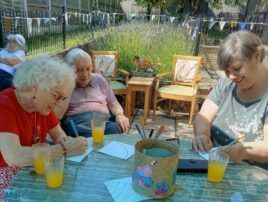
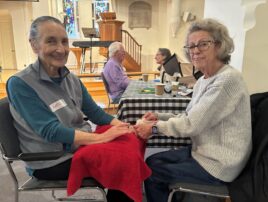
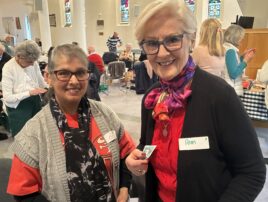
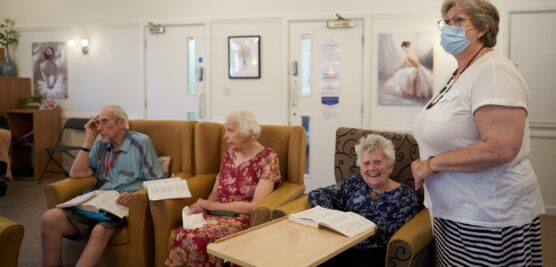
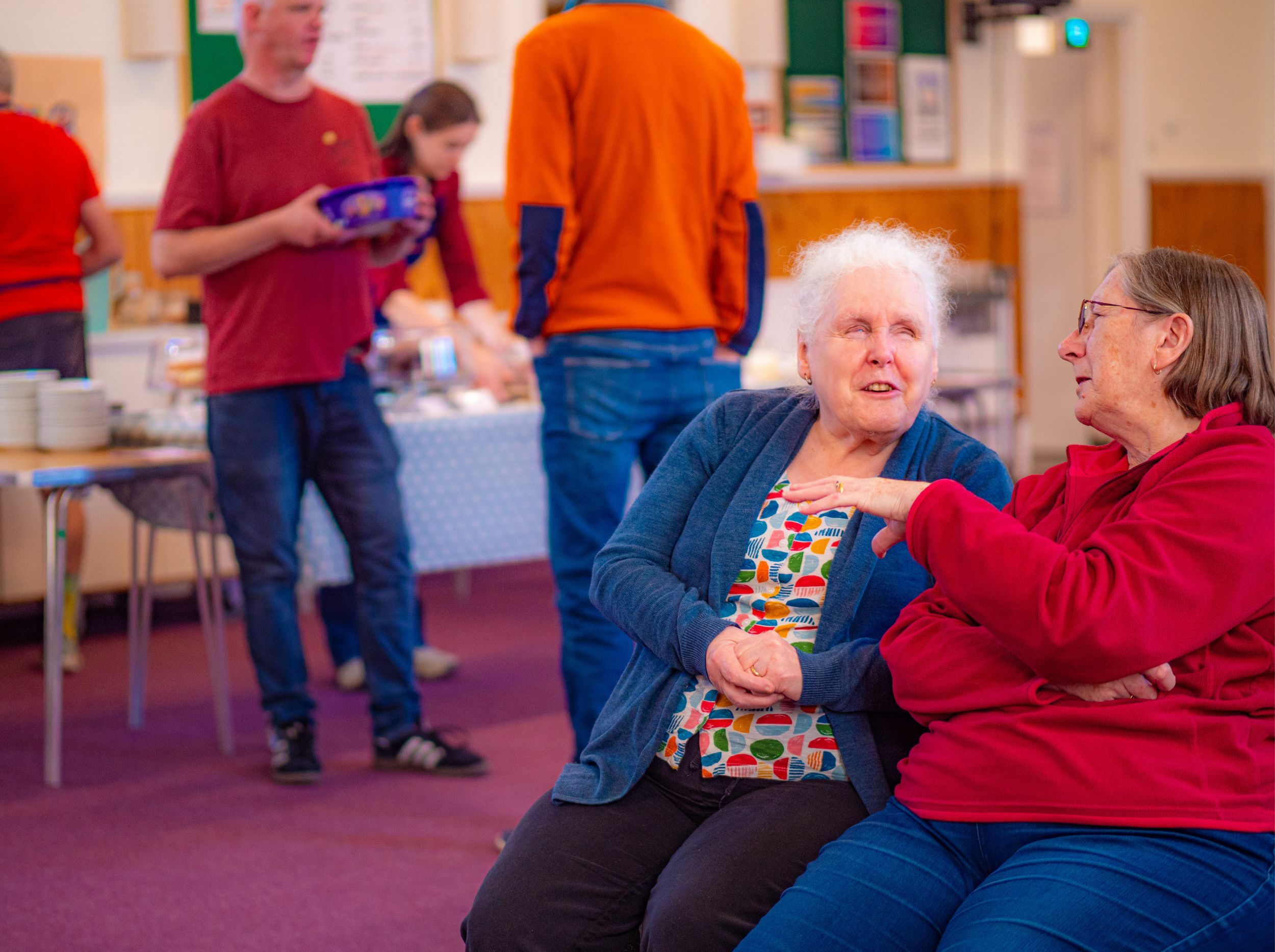
Ebenezer Church, in Bristol, is an example of a church engaging in social prescribing. They have hosted a Warm Welcome Space, a Kintsugi Hope Wellbeing Group, a weekly community café, and a seniors’ group called Footprints. All are run by local volunteers with a heart for generosity and hospitality. Local SPLWs are aware of the work that Ebe church do and have signposted individuals to their community gatherings.
Angela is in charge of the seniors’ group. She says, “Footprints is genuinely a place of company, friendship and support. We welcome everyone and anyone. We have had people socially prescribed to us where it was felt being in a safe and caring environment would help with low mood or depression. It didn’t take
long for new people to feel well and truly accepted as part of a loving community.”
Alongside our report, we published a ‘how-to’ guide for faith leaders which provides clear next steps for churches who want to receive social prescribing referrals into their activities.

magazine
To receive your copy of the magazine FREE four times a year, sign up now.

If you would like to connect your church in to your local social prescribing provision, the best place to start is to find out who your local SPLWs are. Their names and phone numbers will likely be listed on your GP’s website under the ‘meet the team’ or ‘wellbeing’ section. If you can’t find that information, give your GP reception a ring.
Instead of emailing, we suggest you give your SPLW a call. Tell them who you are and what activities you have to offer. Invite them to visit you or ask if you can take them for a coffee. We suggest you use the ‘fact sheet’ template in our ‘how-to’ guide to help you provide all the information your SPLW will need to feel confident prescribing patients to you.
Making this connection and maintaining a relationship with your SPLW is key. Ask if you can keep them updated via your newsletter or email bulletin or if they would be willing to have a coffee every six months.
A good relationship with your SPLW can be the starting point for further engagement with community wellbeing. In central Nottingham, SPLWs hold meetings with patients at church cafés as these are safe spaces, where signposting to other activities and pastoral support is available. In Northampton, Broadmead Community Church ran a community listening event where they asked the local community about their experiences of health and wellbeing. They have built on this by holding regular forums for professionals and volunteers across the town.


In a time when Jesus’ command to love our neighbour can seem overwhelming, connecting with your SPLW and partnering with your community can be a fantastic way to support the wellbeing of our neighbours. As the church, we can offer wellbeing support beyond that which the NHS is able to provide and in doing so we play our part in improving the wellbeing of our society and lessening the load for the NHS to continue to provide clinical healthcare for all who need it.
To read our ‘how-to’ guide, download our printable fact sheet and discover our ‘Creating a Neighbourhood Health Service’ report, click here.
The Good Faith Partnership is a social consultancy that resources projects focused on the relationship between faith and civil society. ChurchWorks is one such project.
For further details, see:
More on tackling big issues in later life...

How dementia friendly is your church?
Sophie Duncan explores simple ways to make churches more dementia-friendly

Life after death
Alexandra Huggins from 'Faith in Later Life' shares how older adults can cope with bereavement and find support

How can we alleviate poverty in later life?
Hosted by financial hardship charity Independent Age, the Poverty in Later Life conference explored the challenges and pressures older people may face